The world is changing, and I think for the better
We built whole careers around copying information from one place to another. AI is about to change that. And even if it's disruptive, it might be the only way back to being human at work.
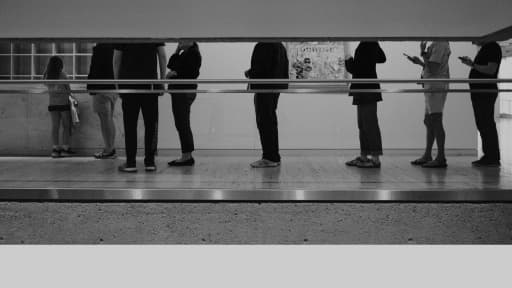
The other day I spent almost an hour at El Corte Inglés waiting in line for an invoice. I'd bought an espresso machine for the office, and the salesperson told me I had to walk over to Customer Service to request it (first problem). When I got there, the queue was a strange mix of priorities: at one point a guy was trying to negotiate his way out of the parking garage because he'd lost his ticket. Eventually I made it to an employee, who asked me for our CIF, asked me to pull up a PDF of the company registration, and walked me through a handful of fields that could have been a form, or simply pulled from another system.
Let me ask you something. Do you really think that's the best value that employee could bring to the business?
I'm sure he had multiple talents. Maybe he's the kind of guy who genuinely loves selling computers and walking people through which laptop fits what they need. Maybe flowers are his secret hobby. Either way, instead of advising customers in his department, he was burning his afternoon administering a tool: me.
This is exactly what AI is about to change. And even though my optimism drives my wife nuts sometimes, I really do think it's going to change for the better.
We built careers around ephemeral things
In the last twenty years we built whole careers around things that are completely ephemeral. Instead of squeezing what's actually human about us, we created jobs that cut and copy information from one place to another. Spreadsheets feeding spreadsheets. Forms feeding forms.
Think about it this way. In the Renaissance, people worked on things you can still see today when you walk through the historic center of any European city. Buildings, paintings, sculptures, books. Do you think the same is going to be true of that SEO keyword spreadsheet from last quarter?
We need to go back to the roots. To give value to what humans actually do best, the human things.
The 30% that actually matters
I see it just as clearly in my own field. As someone who ran a software consultancy for many years, I'd say (rough estimate, finger in the air) that around 70% of a developer's day-to-day is repetitive. Copy this pattern. Paste that config. Stitch this API to that one. But the other 30% is where the real value lives. Finding a solution, identifying a problem, talking to people and connecting dots. That's what makes a great developer shine.
That's why I think this needs to change. We need to embrace what makes us unique again, and put that at the center of the value we bring to the companies we work with.
It's going to be disruptive, of course, and uncomfortable. But it might be the only way back to being human at work.
So when people ask me whether AI is going to wipe out a lot of jobs, my usual answer is yes. And it's also creating new ones. The point is that it's not really about roles or careers. It's about tasks. There are tasks that should never have been human work in the first place, because they're monotonous and bring zero human value. The job ahead is to reformulate what we do in the digital environment, so the human part stays front and center.
That's the version of the future I'm optimistic about. Curious to hear how you're thinking about this. Find me on LinkedIn or X.